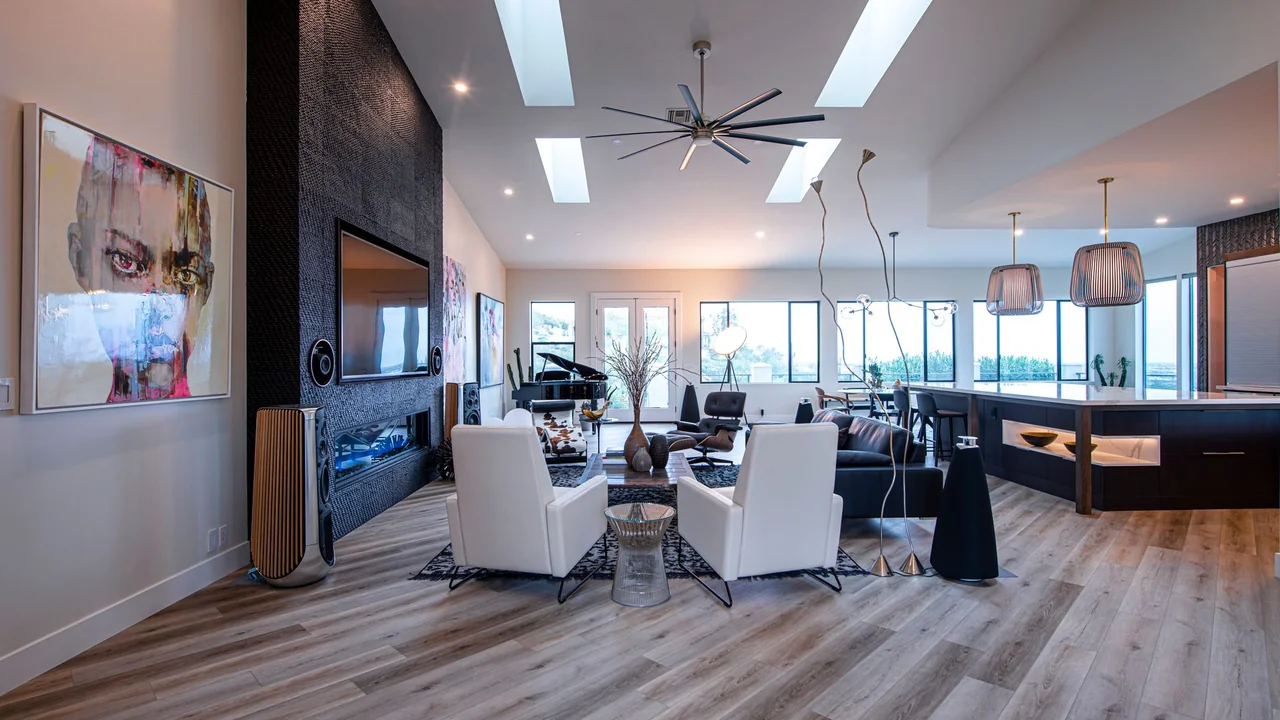
Why does a fan sometimes make a room feel hotter?
Most people treat a home fan as if it were an air conditioner, and that assumption is exactly why their rooms remain hot. Fans move air; they do not remove heat from a sealed space. The difference sounds technical, but it determines whether your fan makes the room feel breezy or just stirs hot air while the temperature keeps climbing.
A fan does not cool the air. It cools people, and only when the air it moves is drier or cooler than their skin.
A fan makes a room feel hotter when it is pulling hot outside air inward during the hottest hours or when it is simply recirculating trapped heat around a sealed space. The core issue is that a fan is more like a river current than a refrigerator. A refrigerator removes heat from a closed box, but a river current moves water from one place to another. A fan can carry cooler air in or push warmer air out, yet it cannot lower the air temperature by itself.
When a fan runs in a sealed room with no open window or door, the motor adds a small amount of heat to the space. The moving air may feel cooler against your skin for a few minutes, but the room itself is not losing heat. If the air is humid, sweat cannot evaporate quickly, so the perceived cooling effect weakens. High indoor humidity makes every fan feel weaker because sweat cannot evaporate. Reducing that load with a portable dehumidifier often makes the same fan far more effective.
Where should a fan be placed to actually cool a room?
Place a fan facing inward in a shaded window on the cool side of the home and pair it with an exhaust fan in an opposite window to create a pressure path. The point is not to blow air at the room but to push stale hot air out while pulling cooler air in. The cool side of a home is often the north side or any side protected by trees, a porch, or another building. The exhaust side should be the warmer, sun-exposed side or an upper floor where hot air naturally collects.
For a single-story home, set one window fan to blow inward on the shaded side and another window fan to blow outward on the opposite side. Keep interior doors open so the current can travel through hallways rather than hitting a dead end. In a two-story home, use a lower shaded window as intake and an upper warm-side window as exhaust, because heat rises and exits more easily from high openings.
Which fan placement mistakes block cross-ventilation?
The most damaging cross-ventilation mistake is using a single fan in a closed room with no exit path for hot air. Seven common errors account for most failed setups.
1. Using a fan in a closed room. With no exit path, the fan recirculates the same hot air and adds motor heat.
2. Pointing the fan outward all day in full sun. A west-facing window pulls in superheated outside air after noon.
3. Placing the fan too far from the window. A fan set in the middle of the room does not exchange indoor and outdoor air, it only stirs what is already there.
4. Blocking the airflow with furniture. Fans cannot push air through a sofa, a bookcase, or heavy curtains.
5. Running a ceiling fan clockwise in summer. That setting pushes warm air down from the ceiling instead of creating a wind chill from below.
6. Using one fan as both intake and exhaust in the same window. A single opening cannot create a cross breeze, the air leaving immediately gets pulled back in.
7. Placing a fan beside heat sources. TVs, refrigerators, gaming consoles, and sunny walls add heat to the air the fan is blowing at you.
How do exhaust and intake strategies change during a heatwave?
During a heatwave, fans should mostly work as exhausters at night and as evaporative coolers aimed at people during the day, because daytime outdoor air is often hotter than indoor air. The window strategy flips depending on the time of day. After sunset, when the outside air drops below the indoor temperature, open windows on opposite sides and set an upper or warm-side fan to blow outward. Set a lower or shaded-side fan to blow inward. This creates a steady current that flushes accumulated heat out of the house.
During the afternoon, if the outdoor air is hotter than the indoor air, close the windows and use fans only on people. A fan aimed at your body speeds up sweat evaporation and creates a wind chill even though the room temperature stays the same. Do not leave fans running in empty rooms during a heatwave, because they cool people, not spaces. If hot nights are ruining sleep, pairing better airflow with foods that help you sleep better can reduce the overall discomfort.
What should you do before turning on a fan tonight?
Before turning on a fan tonight, open two opposite windows, set one fan as intake on the shaded side, set another as exhaust on the hot side, and close curtains on sun-facing glass. Walk through the path the air should take. If a door, curtain, or piece of furniture blocks the route from the intake window to the exhaust window, the current will stall. Move the obstruction or choose a different window pair.
The test is simple. Stand near the doorway between the intake and exhaust windows after sunset. If you feel a steady current moving across your body, your setup is working. If the air feels still, one of the seven mistakes is still blocking the path. That single observation tells you more than any thermostat reading.
Do fans actually lower room temperature?
No. Fans move air but do not remove heat from a room. They make your body feel cooler by accelerating sweat evaporation, so they should be turned off in empty rooms.
Should a fan face in or out of a window?
Face the fan inward on the shaded or cooler side of the home and use a second fan facing outward on the opposite or hotter side. This creates cross-ventilation and pushes hot air out while pulling cooler air in.
Where should a fan be placed at night?
Place an exhaust fan in an upper or warm-side window blowing outward and an intake fan in a lower or shaded-side window blowing inward. Keep doors open so air can travel between the two openings.
Why is my room hotter with the fan on?
If the room is sealed, the fan motor adds heat and the air simply recirculates. If the fan is in a sunny window facing inward, it may also be pulling hot outside air into the room.
Can two fans cool a room better than one?
Yes, when they are placed in opposite windows as an intake and an exhaust pair. One fan alone can only stir air unless there is another opening for air to leave or enter.